2025 Emissions Testing Changes by State: Year-in-Review
See what changed for emissions testing in 2025. State-by-state updates on Texas inspections, New Hampshire phase-out, Bexar County rules, and what to check before renewal.
Read ArticleArticle
Learn how catalytic converter theft affects your emissions test, which replacement cats are legal, and how long to drive before retesting after a converter is replaced.
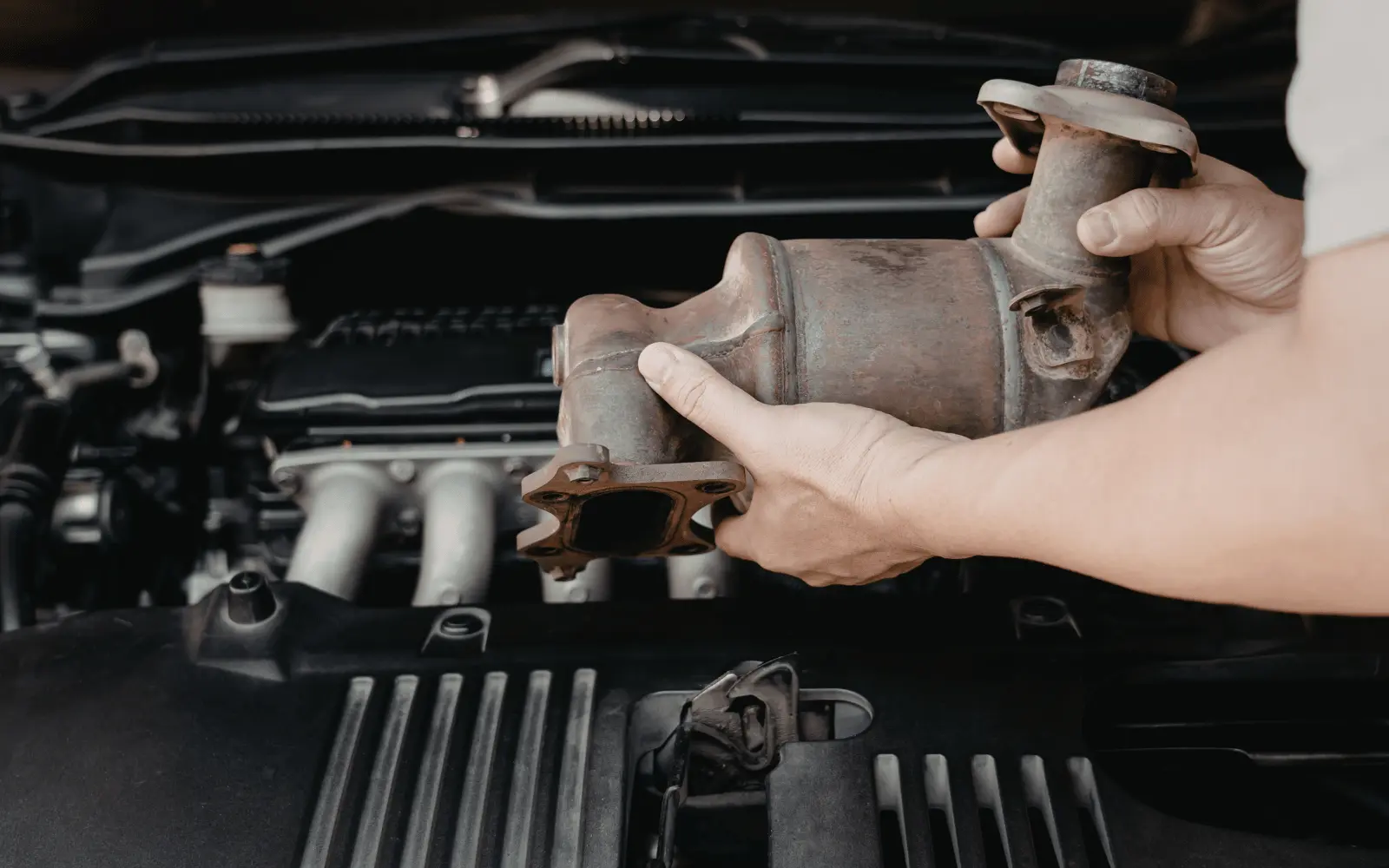
If your catalytic converter was stolen, you are dealing with more than just an expensive repair. You are also facing a potential emissions test failure until the problem is properly fixed. A missing converter will fail visual inspection in most states, and even after replacement, you need to drive the vehicle long enough for the computer to reset before you can pass an OBD-II test. On top of that, the replacement converter has to be the right one. States like California and others with CARB rules require specific certified converters for many vehicles. Install the wrong one and you can fail again, even with a brand-new part. This article explains why stolen converters wreck your emissions test, the difference between OEM and aftermarket converters and which ones are legal, what insurance paperwork to keep, how long to drive before retesting after replacement, and how to prevent theft and stay ready for your next smog check. If you are recovering from a catalytic converter theft, here is what you need to know to get back on the road and through your next emissions inspection.
The catalytic converter is legally required on almost all gasoline vehicles built after 1975. Removing it is a federal Clean Air Act violation, and driving without one will fail you in most emissions programs. In many states, an obviously missing converter is an automatic fail on visual inspection, even if the check engine light is not on yet. When a converter is stolen and the exhaust is left open or straight-piped, the engine computer usually throws P0420 or P0430 codes for catalyst efficiency after a few drive cycles. In OBD-II programs, any emissions-related check engine light that is commanded on means automatic failure. A missing or gutted converter can also cause readiness monitors for the catalyst and oxygen sensors to stay not ready or repeatedly fail. Even vehicles that got a cheap fix like a welded pipe or an empty shell may pass a quick visual glance but still fail OBD because the sensors detect bad catalyst performance. You might be able to drive short-term after the theft, but you will not be able to renew registration in most states until a compliant converter is installed and the vehicle passes.
In all states, replacement catalytic converters must meet federal EPA aftermarket catalyst policy. They must be engineered for your specific vehicle application, properly labeled, and meet performance and warranty standards. In California and other CARB states, the rules are stricter. Many vehicles require a CARB-approved converter with an Executive Order number stamped on the shell. Inspectors look for this EO number during visual inspection. States that have adopted CARB-style aftermarket converter rules include New York, Colorado, Maine, Vermont, and others for certain model years and vehicle categories. Installing a cheap universal converter where a CARB-approved one is required can mean you fail visual inspection because there is no EO label, you still fail OBD if efficiency is not adequate, and the shop may be violating federal and state law. Insurance and warranty work usually specifies OEM-equivalent or CARB-approved parts. Using cheap parts from the internet to save a few hundred dollars can cost you multiple failed tests and rework. If your state uses CARB rules, the inspector is not just checking that a converter is there. They are checking that the right converter is there.
Ready to get your emissions test?
Find certified testing stations near you.
Catalytic converter theft is generally covered under comprehensive auto insurance, subject to your deductible. Collision and liability policies do not cover it. Replacement jobs can easily run $1,000 to $3,500 or more for some models, especially hybrids, when you factor in parts, labor, and oxygen sensors. Keep paperwork in your glovebox or records folder. You want the repair invoice showing the date, shop name, and total cost. Keep the part number and brand of the new converter. For CARB states, keep the CARB EO number and confirmation that the converter is approved for your exact year, make, and engine. If the shop gives you photos of the install or the label on the converter, keep those too, especially if the converter is tucked up where it is hard to see. Some inspection programs and warranty schemes may ask for proof that the part is new, not used, and proof that the installer is a licensed repair facility. Having clean documentation makes retests smoother and helps in any dispute about whether the correct part was installed.
After the converter is replaced, the shop will usually clear codes. This resets the catalyst and oxygen sensor readiness monitors. If you go straight to the test lane after a reset, you are likely to get too many monitors not ready, which is an automatic fail in many OBD programs. EPA guidance allows a small number of not-ready monitors depending on model year, but states can be stricter. Best practice is to drive through several days of mixed city and highway driving totaling at least 50 to 100 miles before testing. Avoid very short trips only. The catalyst needs full warmup cycles to run its self-checks. Many manufacturers publish a specific drive cycle in the service manual to quickly set readiness. It usually includes a cold start, steady cruise, accelerations, decelerations, and idle segments. You should only book your retest when no check engine light is on and a scan tool shows all required monitors are ready or within your state's allowed not-ready limit. Pay a shop for a quick pre-check scan before heading to the official lane. It is cheaper than burning a test failure because monitors were not ready.
Catalytic converters contain platinum, palladium, and rhodium, which made them a huge theft target during 2020 through 2022. Some states saw claim increases of over 6,000 percent. New laws in many states now restrict scrap yards from buying loose converters without documentation, which is helping theft rates drop. Practical prevention measures include installing a cat shield, cage, or skid plate on high-risk vehicles like the Prius, trucks, SUVs, and vans. Etch your VIN or plate number onto the converter and apply bright paint. It is not foolproof, but it deters some thieves. Park in garages, fenced lots, or well-lit areas with camera coverage whenever possible. Ask your shop to weld rather than clamp where practical, making removal noisier and slower. For your next emissions test, tell the shop upfront that you live in a testing area so they select the correct EPA or CARB-approved unit. After any exhaust work, check for leaks. Leaks upstream from oxygen sensors can mess with readings and cause failures. Before your next scheduled smog check, scan for codes and readiness so theft-related issues do not surprise you at the testing lane.
FAQ
Have a question not covered here? Contact us and we will respond within one business day.
If your state requires emissions testing and your registration renewal is due, yes. After replacement, drive the vehicle for several days and at least 50 to 100 miles of mixed driving before testing. This allows the computer to reset readiness monitors. Going straight to the test lane after a code clear will likely result in a fail for monitors not ready.
It depends on the converter and your state. In California and other CARB states, the replacement must be CARB-approved with an Executive Order number for your specific vehicle. A cheap universal converter without proper certification can fail visual inspection even if it is brand new. Check your state's rules before buying a replacement.
Wait until you have driven at least 50 to 100 miles of mixed city and highway driving over several days. The engine computer needs to run self-checks and set readiness monitors. Before heading to the test lane, use a scan tool or pay a shop to verify no check engine light is on and all required monitors are ready.
Yes, if you have comprehensive coverage. Collision and liability do not cover theft. Replacement costs can run $1,000 to $3,500 or more depending on the vehicle. Keep all repair invoices and part documentation for insurance claims and for proving the correct part was installed during your next emissions inspection.
List your station for free and connect with drivers actively searching for certified emissions testing and smog check locations near them. Every visitor on this page is looking for exactly what you offer. A verified listing is the most efficient way to advertise your station, putting you in front of local drivers at the exact moment they need an inspection.
No credit card required. Free plan available forever.
See what changed for emissions testing in 2025. State-by-state updates on Texas inspections, New Hampshire phase-out, Bexar County rules, and what to check before renewal.
Read Article
See which U.S. states have no emissions testing requirements in 2025, which recently ended their programs, and which are phasing out smog checks soon.
Read Article
Find out what happens when a deleted diesel hits a smog check. Learn about federal anti-tampering laws, how inspectors spot DPF and EGR deletes, and legal alternatives.
Read Article